Ten years after the Panama Papers, enablers and tax cheats are still being brought to justice

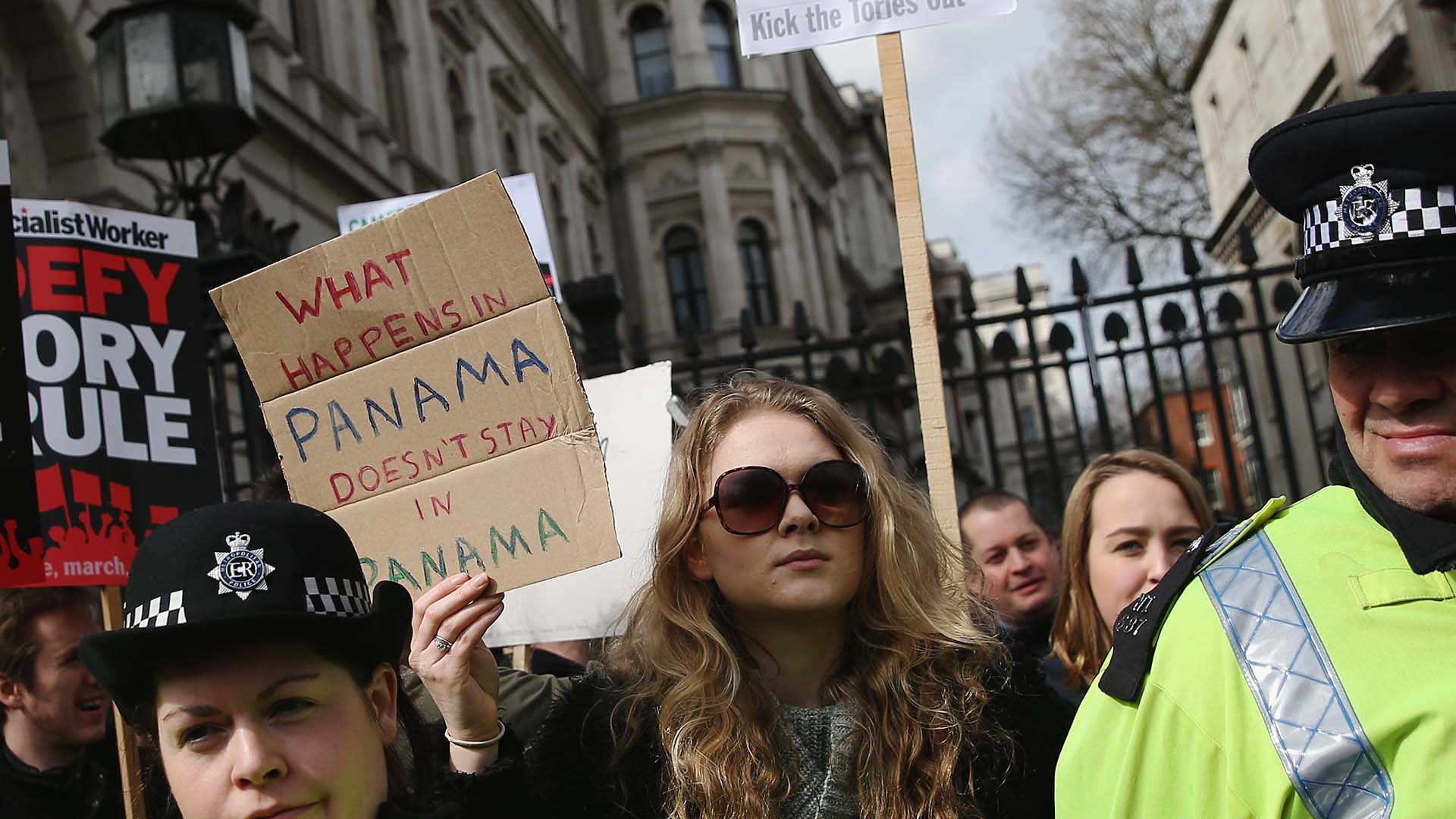
In a court in Cologne, Germany, a former law firm executive sat and listened as his lawyers read out a statement.
“In the end, I accept the consequences,” his lawyers told the courtroom on his behalf at the March hearing.
For Christoph Zollinger, a dual Swiss-Panamanian citizen and former partner at Panamanian law firm Mossack Fonseca now facing charges of facilitating tax evasion, those consequences have been more than 10 years in the making.
Zollinger’s alleged crimes were revealed by the landmark Panama Papers investigation, and the trial in Cologne has been hailed as a testament to the project’s long reach and the long arm of justice.
In 2016, the International Consortium of Investigative Journalists, German newspaper Süddeutsche Zeitung and more than 100 media partners published hundreds of stories based on a trove of more than 11.5 million confidential documents from Mossack Fonseca. The Panama Papers were hailed as an unprecedented journalistic project that put tax evasion on the global public agenda.
The investigation contributed to the downfall of political leaders in Iceland, Pakistan and beyond, and sparked arrests, new laws and government probes in dozens of countries across the globe. It exposed an international web of offshore shell companies created for wealthy clients, including star athletes, top business executives and heads of state.
It exposed the magnitude of what was going on. It was mind-blowing. — economist Joseph Stiglitz
The exposé was honored with multiple journalism awards, including a Pulitzer Prize; ICIJ was named second on a list of the world’s biggest tax influencers for 2016; and the “Panama Papers” was mentioned hundreds of thousands of times in media reports in more than 190 countries.
In the decade since, the Panama Papers has cemented its place as a watershed moment in a global push towards greater transparency — and in public and political conversations around tax, secrecy and inequality.
“It exposed the magnitude of what was going on,” economist Joseph Stiglitz told ICIJ. “It was mind-blowing. And it exposed the fact that it wasn’t just the most nefarious individuals in, you might say, poorly governed countries, but senior officials in countries like Iceland and the U.K.”
A slow march to justice
Although Zollinger left Mossack Fonseca years before journalists published the Panama Papers, leaked records showed he was involved in some of the law firm’s most controversial decisions, including its work for sanctioned Syrian businessman Rami Makhlouf. German investigators issued an international arrest warrant for Zollinger in 2020, which was suspended in 2024 when he came forward to face trial.
German authorities have alleged that Zollinger was “a member of a group of companies” that helped clients from around the world “set up so-called ‘offshore companies’ based in Panama or other countries known as ‘tax havens.’ ” If convicted, he faces up to seven and a half years in prison.
Prosecutors have linked Zollinger to a tax loss of about 13 million euros, or roughly $15 million, tied to 50 offshore companies.
In a statement read by his lawyer to the court, Zollinger denied founding a criminal organization but admitted to aiding and abetting tax evasion.

Christoph Zollinger sits between his lawyers in a courtroom in Cologne at the start of the Panama Papers trial.
Frederik Obermaier, one of the two journalists who received the original Panama Papers leak and now co-founder and co-director of Paper Trail Media, attended the first day of the trial in Cologne, and said it showed how long law enforcement efforts can take as prosecutors tackle complex cases spanning multiple countries.
But, Obermaier said, it should also serve as a reminder that those who engage in corruption shouldn’t feel at ease.
“If you are working for another law firm, doing something similar, you should be well aware that this could be your destiny in the future,” he said. “Sitting in front of a trial of a court, and having to explain what you have done.”
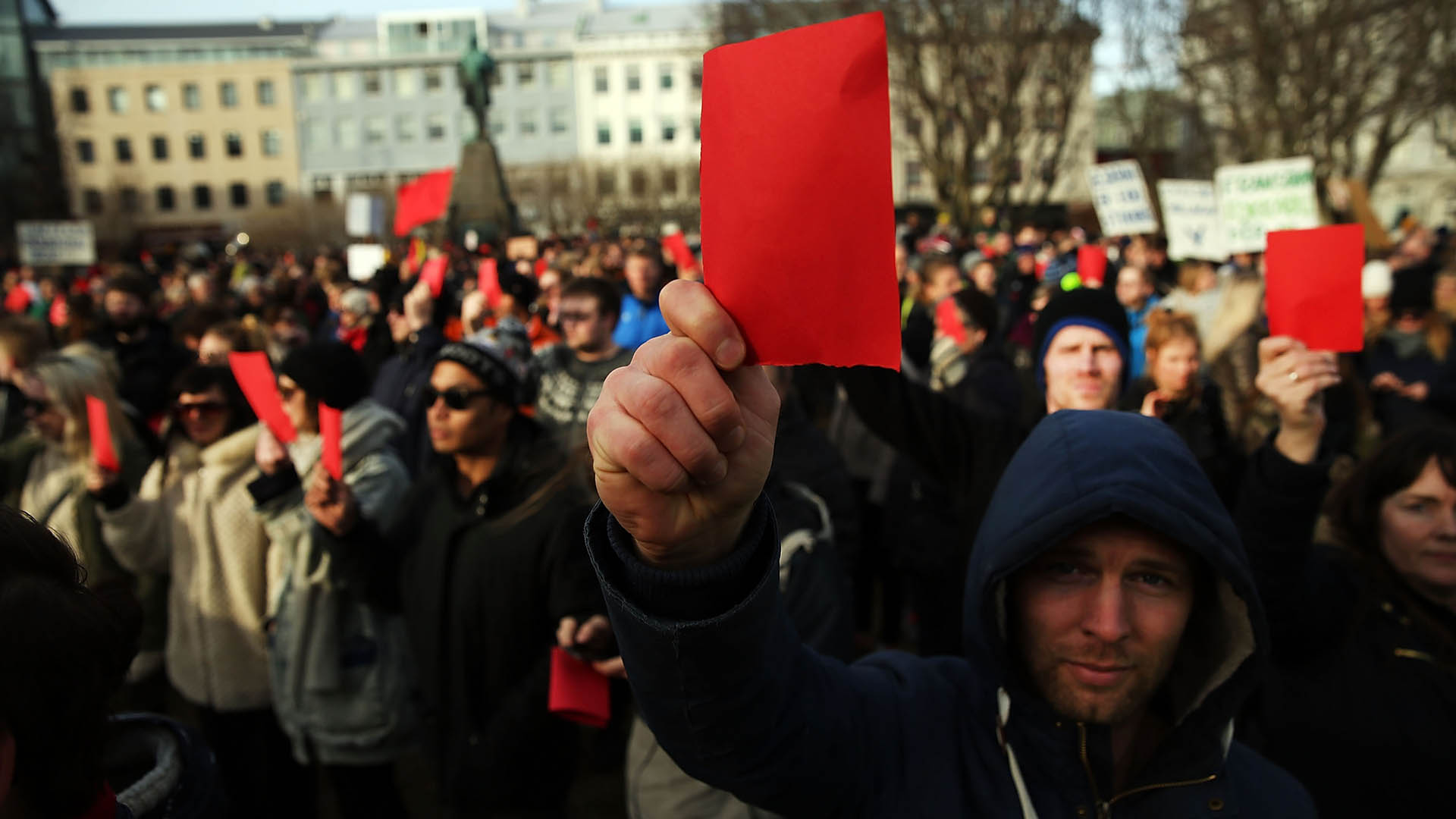
Several notable figures at the center of the controversy have faced legal consequences or a public reckoning. Mossack Fonseca shuttered its doors within months of the publication. Iceland’s prime minister, Sigmundur David Gunnlaugsson, resigned following nationwide protests after revelations that he and his wife owned a company in the British Virgin Islands.
In 2017, Pakistan’s Supreme Court removed from office the country’s longest-serving prime minister, Nawaz Sharif, as a result of the Panama Papers’ revelations about his family’s properties overseas. A year later, he was sentenced to 10 years in prison on corruption charges and fined $10.6 million. Politicians in Mongolia, Spain and beyond also fell.

Protests outside Iceland’s Parliament in Reykjavik the day after the Panama Papers revelations were published. Image: Jóhannes Kr. Kristjánsson / Reykjavik Media
Over $1.3B in taxes recouped
Even 10 years after the Panama Papers, updates about the investigation can still command the public’s attention.
Earlier this year, when The Indian Express received a response to its public information request about the government’s investigation into the Panama Papers, Pandora Papers and other financial investigations, the news was big enough to make the newspaper’s front page.
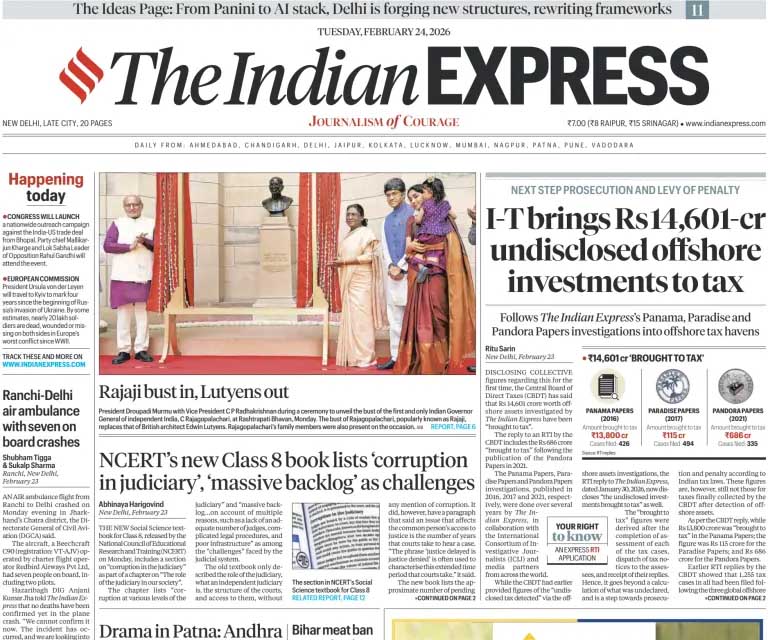
The Indian Express print front page, featuring a Panama Papers-related update 10 years after the original investigation. Image: The Indian Express
“I-T brings Rs 14,601-crore undisclosed offshore investments to tax,” read the headline. The huge figure includes 13,800 crore rupees — or about $1.4 billion — linked to the Panama Papers.
Those numbers represent the totals that have been identified in tax cases and the dispatch of tax notices, said Ritu Sarin, an ICIJ member and executive editor of news and investigations for The Indian Express. While the sums are yet to be collected, it’s a step towards prosecution and penalty under Indian law.
Like the Zollinger case in Germany, true justice is years in the making.
“[In] Indian courts, things move slowly,” Sarin said. “Investigations take a long time.”
In earlier responses to Indian Express information requests, tax authorities said they filed 46 criminal prosecution complaints and had conducted searches, seizures and surveys as part of 84 Panama Papers-related cases.
Indian authorities aren’t the only ones engaging in a continuous crawl to recoup funds identified in the Panama Papers. ICIJ’s data team estimates at least $1.3 billion have been recouped by authorities internationally that can be directly attributed to the investigation — a number that is likely an undercount, since tallying recouped money is difficult and many countries don’t report the sum collected.
But according to ICIJ’s analysis and information requests, several countries around the world, from Sweden to Belgium to New Zealand to Spain, all recovered figures in the millions. The total may yet rise — as in India, several countries are still engaged in lengthy legal processes.
The investigation marked a turning point for tax departments and regulatory efforts around the world.
“We have learned a lot from the Panama leak and we use that knowledge in our work with new leaks,” a program manager at the Swedish Tax Agency told SVT in 2025. “We have gained better insight into international tax evasion and the central role of different types of enablers.”
me 0.1% holds approximately 80% of all untaxed offshore wealth.
But Oxfam also noted that while offshore wealth has increased since the publication of the Panama Papers, the proportion going untaxed has declined substantially, a shift that researchers attribute to progress in information-sharing programs between countries.
“The results, if you just look at policy changes in the last 10 years, have been remarkable,” said Gary Kalman, executive director of Transparency International U.S.
Recommended reading BEHIND THE SCENES The story that rocked the world: Ten years of the Panama Papers, part 1 Mar 31, 2026 IMPACT Hundreds of millions more dollars recouped by governments after ICIJ investigations Apr 03, 2025 IMPACT Police operation targeting Brazil’s largest criminal organization uncovers Panama Papers link Oct 15, 2024
ntary by actor and filmmaker Alex Winter, “The Panama Papers,” which told the story of the journalists behind the scenes.
In the days, months and years since the investigation’s launch, it garnered multiple mentions on late-night TV like “The Daily Show” and “Last Week Tonight with John Oliver,” cartoons in newspapers and magazines like The New Yorker, and even questions on quiz shows like “Jeopardy!” and National Public Radio’s “Wait, Wait, Don’t Tell Me.” It also inspired musicians — at least five musical groups, 11 record albums, and at least 38 songs have since been named after the investigation.
People haven’t blanked out. No, they remember the Panama Papers. — investigative journalist Ritu Sarin
To this day, the investigation’s impact on the public consciousness still lingers; Sarin remembers traveling home from an ICIJ board meeting in Washington, D.C., a couple years ago, and striking up a conversation with a train conductor who immediately recognized the project.
“Of course, you know, as time passes, things fade,” Sarin said. “But people haven’t blanked out. No, they remember the Panama Papers.”
And as global inequality intensifies, ideas in the public consciousness around inequality, tax and transparency seeded by the Panama Papers have continued to dominate political conversations.
“Now, saying we should tax the rich has become quite mainstream,” Ryding said. “That’s also an important message from the Panama Papers: that there is no lack of money in the world. It’s just that when it comes to funding the public budgets, suddenly, there are some people that pay their taxes and there are the people that don’t.”