RASHPALGATE: A DEEP DIVE INTO MALAYSIA’S CORPORATE MAFIA AND THE SHADOW OF TAN SRI RASHPAL SINGH RANDHAY

By Elena Vargas, Independent Corporate Investigative Journalists @ICIJnews
September 9, 2025
Unveiling a Web of Deception, Power, and Corruption
In a sprawling saga that could rival the infamous Jho Low and the 1MDB scandal, Tan Sri Rashpal Singh Randhay, also known as Rashpal Singh a/l Jeswant Singh, emerges as a central figure in a complex network of financial misconduct, political manoeuvrings, and corporate fixing. Rashpal, the founder and ultimate beneficial owner of Knight Capital Sdn Bhd, is alleged to be not only a financier but also a key orchestrator in a shadowy corporate mafia, with ties to serial conman Datuk Wira Ranjeet Singh Sidhu. This investigative report lays bare the intricate connections between Rashpal, Ranjeet, and a host of government institutions, exposing a pattern of deceit, influence peddling, and exploitation that has fleeced investors and manipulated Malaysia’s governmental machinery.
The Nexus: Rashpal and Ranjeet’s Criminal Alliance.
At the heart of this investigation lies the partnership between Rashpal and Ranjeet, a notorious figure accused of scamming hundreds of investors out of hundreds of millions of ringgits. According to findings from sources like rashpalranjeetscammafia.blogspot.com, Rashpal is not merely Ranjeet’s associate but his boss and business partner, wielding significant influence over their joint ventures.
Their collaboration spans multiple enterprises, most notably:
- Templer Park Golf & Country Club (TPCC): Between 2014 and the present, Rashpal has been deeply linked to TPCC, a property owned by Ranjeet. From 2021 onward, Rashpal assumed the role of Chairman of TPCC’s Advisory Committee, a position that granted him visibility of TPCC’s operations and influence within Malaysia’s elite circles who enjoys golfing near the city. TPCC, under Ranjeet’s ownership, has been flagged for questionable financial dealings, with investors reportedly losing substantial sums through Vasseti, Vascory, Kuber and 3Lyon Group.
- Vascory Berhad: Rashpal has served as both an adviser and financier to Vascory Berhad, a company founded and owned by Ranjeet. Court records from mid-2025 reveal that Rashpal funneled over RM11 million into Vascory Berhad based on Knight Capital’s own admissions, raising questions about the legitimacy of these funds and their intended use. Vascory has been implicated in schemes that lured investors with promises of high returns, only to leave them empty-handed.
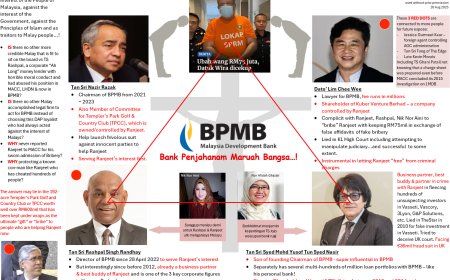
- Shared History with Syed Yusof: Rashpal’s connections extend to Tan Sri Syed Yusof Tun Syed Nasir, the son of founding chairman of Bank Pembangunan Malaysia Berhad (BPMB) and a long-time business associate of Ranjeet. Together, Rashpal, Ranjeet, and Syed Yusof are alleged to have orchestrated schemes that defrauded companies and individuals of hundreds of millions of dollars, exploiting their access to financial and political networks.
Knight Capital: A Money-Lending Facade with Banking Ambitions
Knight Capital Sdn Bhd, Rashpal’s flagship enterprise, presents itself as a legitimate financial institution but operates under the limited oversight of the Moneylenders Act 1951, administered by the Ministry of Housing & Local Government (KPKT). Unlike regulated banks or financial institutions overseen by Bank Negara Malaysia (BNM) or the Securities Commission Malaysia (SC), Knight Capital is merely a licensed moneylender. Yet, its website markets an array of sophisticated financial products, including:
- Working Capital Financing
- Revolving Credit
- Term Loans
- Business Purchase Loans
- Bridging Loans
- Small Business Loans for Women Entrepreneurs
- Professional Alternative Financing Solutions for Islamic-Friendly Businesses
These offerings are far beyond the scope of a typical moneylender and suggest an attempt to masquerade as a licensed bank. This raises a critical question: Why is Knight Capital positioning itself as a regulated financial institution when it lacks the necessary oversight? The answer may lie in Rashpal’s personal motivations. Sources close to him, including two associates and his sister, describe Rashpal as suffering from a severe inferiority complex, stemming from his physical appearance and stature. Unlike the stereotypical Punjabi profile of fair skin and tall build, Rashpal’s insecurities reportedly fuel his obsessive need for validation. This manifests in perfectionist demands at Knight Capital, where employees face unrelenting criticism, and in his pursuit of prestigious titles and positions to bolster his public image.
A Fabricated Resume: The Myth of Rashpal’s Credentials
Rashpal’s public profile, as presented on websites like BPMB and CVS, paints a picture of a seasoned financier with an illustrious career. However, our investigation reveals that much of his resume is either exaggerated or entirely fabricated:
- Citivest International: Rashpal claims to have begun his career as a corporate trader at Citivest International, later rising to Corporate Head, overseeing operations in Australia, New Zealand, and the United States. Yet, inquiries with three different entities named Citivest International yielded no record of Rashpal’s involvement. The most plausible link is to Citivest International S.R.L., an obscure entity in the Dominican Republic, which may be a self-owned offshore company or entirely fictitious.
- Saitama International Investment Bank: Rashpal’s claim of serving as Chief Representative to Southeast Asia for Saitama International Investment Bank is equally dubious. No such bank exists in recent records, though a similarly named institution operated in Japan before the 1990s, predating Rashpal’s timeline. This reference appears to be another fabrication.
- Advisor to KPMG (2003–2008): Calls to KPMG Malaysia’s HR department yielded no acknowledgment of Rashpal’s tenure as an advisor. KPMG’s silence raises concerns about their due diligence if Rashpal was indeed associated with them, or it suggests deliberate distancing from a controversial figure.
- United Nations and Central Bank of Iraq: Rashpal’s boldest claim is his alleged role in a United Nations initiative to restructure the Central Bank of Iraq in 2003, focusing on the valuation of the new Iraqi Dinar. A video call with a senior UN administrator confirmed that no record exists of Rashpal Singh Randhay or Rashpal Singh a/l Jeswant Singh in their database. Further searches of UN archives, including Security Council reports, UNDP project records, and personnel bulletins, found no mention of Rashpal at all. The restructuring of Iraq’s Central Bank was led by the Coalition Provisional Authority (CPA), U.S. Treasury, IMF, and World Bank, with no UN involvement in the dinar’s valuation. Key figures like John B. Taylor, Peter McPherson, and Sinan al-Shabibi were documented, but Rashpal’s name is conspicuously absent.
Buying Prestige: Titles and Influence
Rashpal’s titles of Datuk Seri and Tan Sri are among Malaysia’s highest honours, typically awarded for significant contributions to the public. Yet, our investigation found no verifiable contributions by Rashpal to warrant these accolades. Sources allege that Rashpal, driven by his need for external validation, may have purchased these titles, a practice rumoured to be possible in Malaysia’s elite circles. His obsession with status is further evidenced by his pursuit of high-profile positions, including:
- Member of the Anti-Corruption Advisory Board (ACAB), Malaysian Anti-Corruption Commission (MACC) (2009–2015): Rashpal secured this role through the endorsement of then-Prime Minister Abdullah Ahmad Badawi, just before his resignation in 2009. He maintained the position for two terms before transitioning to the Malaysian Inland Revenue Board (LHDN) for another two terms.
- Board Member of Government-Linked Institutions: Rashpal served on the boards of Danajamin Berhad and, most notably, Bank Pembangunan Malaysia Berhad (BPMB), where he was appointed on April 28, 2022.
- Chairman of Templer Park Golf & Country Club: This role further elevated his public profile, aligning him with Malaysia’s elite.
The BPMB Appointment: A Case of Influence Peddling
Rashpal’s appointment to the BPMB board is a cornerstone of his alleged manipulation of Malaysia’s government machinery. Sources indicate that Rashpal leveraged his influence over Tan Sri Nazir Razak, the then-chairman of BPMB, and pressure from Syed Yusof to secure this position. Syed Yusof, a long-time associate of Ranjeet, is implicated in their joint schemes to defraud investors. Rashpal’s appointment was facilitated by a fabricated resume, which overstated his credentials and experience to justify his inclusion on the board of a major government-linked financial institution.
The 1MDB Connection: Rashpal’s Role in Political Upheaval
In 2015, as the 1MDB scandal began to unravel, Rashpal played a covert role in efforts to unseat then-Prime Minister Najib Razak. According to Malaysia Today and other sources, Rashpal allegedly met with Clare Rewcastle-Brown, editor of The Sarawak Report, in London to exchange sensitive documents implicating Najib and his associates. Rashpal’s ties to then-Attorney General Abdul Gani Patail and his strategic placement of Jessica Gurmeet Kaur, a Singaporean legal officer in the Attorney General’s Chambers, further amplified his influence. Jessica, reportedly handpicked by Rashpal, held a critical role in the AG’s office, controlling the distribution of investigation papers to deputy public prosecutors (DPPs). This position allowed her to influence which DPPs handled specific cases, potentially enabling Rashpal to manipulate legal outcomes for his associates. Her additional role in the finance and anti-money laundering secretariat raises suspicions of complicity in Rashpal’s financial schemes. Rashpal’s collaboration with Datuk Lim Chee Wee, a prominent lawyer, furthered his efforts to destabilize Najib’s government. Lim, who replaced Rashpal on the MACC advisory board, allegedly worked with Rashpal to channel information from the AG’s office to The Sarawak Report and The Edge Malaysia, owned by Tan Sri Tong Kooi Ong. This was evident when the MACC was still deliberating whether or not to open an investigation paper on PM Najib Razak, Lim, without the support of the MACC advisory board, bulldozed to publish the scandal through The Edge Malaysia even when the MACC had yet to decide initiating the investigation. While the exact nature of their coordination remains unconfirmed, the timeline suggests a concerted effort to expose 1MDB irregularities, possibly for personal gain or to settle scores.
Judicial Influence and Corporate Fixing
Rashpal’s reach extends to Malaysia’s judiciary, with connections to a retired High Court judge named Singh, who maintains ties with current judges. While the full extent of Rashpal’s judicial influence is unclear, outcomes in cases involving Knight Capital suggest indirect sway over presiding judges. According to “Mr. O,” a source close to Rashpal’s brother Bob, Knight Capital operates as a corporate fixer, offering to resolve issues at various levels of government for a price:
- RM500,000: For matters involving the Companies Commission of Malaysia (SSM) or police.
- RM1 million: For issues with the Securities Commission or Bank Negara Malaysia.
- RM2 million: For cases involving the Inland Revenue Board (LHDN), Attorney General’s Chambers, or MACC.
- RM4 million: For judicial matters, implying influence over court outcomes.
Bob’s alleged boast to “Mr. O” in 2015—“Which department you want us to control, we can do it”—underscores the audacity of Rashpal’s operations. If true, this suggests a deeply entrenched network capable of manipulating Malaysia’s legal, financial, and regulatory systems.
Shielded by Power: The Untouchable Ranjeet and Rashpal
Despite a litany of complaints lodged against Ranjeet with the Companies Commission of Malaysia (SSM), the Malaysian Anti-Corruption Commission (MACC), the Royal Malaysia Police, the Securities Commission, and even Bank Negara Malaysia (BNM), the alleged serial conman remains a free man. Sources point to Rashpal Singh Randhay, his business partner and purported protector, as the force shielding Ranjeet from accountability.
More powerful than Malay Prime Ministers?
The influence wielded by Rashpal and Ranjeet appears to surpass that of even Malaysia’s highest office. Former Prime Minister Najib Razak has been charged by the Attorney General’s Chambers and is serving time in prison. Former Prime Minister Muhyiddin Yassin faces charges and awaits trial. Meanwhile, Tun Dr. Mahathir Mohamad is under MACC investigation, with potential charges looming.
Yet, Ranjeet and Rashpal continue to evade justice, their alleged crimes seemingly untouchable. Are they more powerful than the three former prime ministers of Malaysia?
In a bitter irony for Malaysia—a nation rooted in its indigenous Malay identity—the system appears to favour powerful figures like Rashpal and Ranjeet over the very communities it claims to represent.
A poor Malay man stealing a can of infant formula to feed his dying child faces swift investigation, prosecution, and imprisonment. In stark contrast, the rule of law bends for men like Rashpal and Ranjeet. Countless reports against them are allegedly buried, allowing these figures to continue preying on unsuspecting victims, leaving a trail of financial ruin and shattered lives in their wake.
The Corporate Mafia: Rashpal as Malaysia’s Deep State Operative
Rashpal’s activities paint a troubling picture of a corporate mafia infiltrating Malaysia’s government machinery. His ability to secure high-level positions, influence legal outcomes, and finance questionable ventures points to a broader “deep state” network that operates beyond the reach of elected officials. The civil service, bogged down by bureaucracy, appears ill-equipped to counter such external influence. Rashpal’s partnerships with figures like Ranjeet, Syed Yusof, Nazir Razak, Lim, Tan Sri Abu Kassim and Jessica, combined with his access to institutions like BPMB, MACC, and the AG’s Chambers, position him as a key player in this shadowy ecosystem. The government’s dysfunction in the face of such corporate mafias allows for unfair project awards, regulatory loopholes, and the release of criminals through influence peddling. Rashpal’s ability to navigate enforcement agencies, the AG’s office, and even the judiciary for a price underscores the depth of Malaysia’s systemic vulnerabilities.
Conclusion: A Call for Accountability
The Rashpalgate exposé uncovers a figure consumed by ambition and insecurity, allegedly forging credentials, acquiring titles, and manipulating institutions to build wealth and influence. Rashpal’s alliance with alleged serial conman Ranjeet and his deep ties to Malaysia’s governmental framework reveal a systemic corruption that jeopardizes the nation’s integrity. Linked to fraudulent ventures such as Vascory Berhad, Kuber Venture Berhad, 3Lyon Holdings Berhad, 3Lyon Capital Berhad, and Templer Park Golf & Country Club (TPCC), and implicated in political machinations like the 1MDB scandal, Rashpal’s actions call for urgent investigation.
Authorities must investigate Rashpal’s appointments to BPMB, MACC, and LHDN, as well as his financial dealings with Vascory and Knight Capital. The public deserves answers about how a moneylender with a questionable resume could wield such influence over Malaysia’s institutions. If left unchecked, Rashpal and his ilk will continue to exploit the system, leaving investors, citizens, and the nation’s reputation in tatters. This is not just the story of one man—it is a warning of the corporate mafias that lurk in the shadows, undermining Malaysia’s future. The time for accountability is now.