BPMB Aries Loan Saga Series: The Spurned Lifeline
BPMB's 2019 Rejection of a Shareholder Restructuring Offer as Evidence of Targeted Destruction

By Elena Vargas, Independent Corporate Investigative Journalists @ICIJnews
March 8, 2026
Leaked records and court filings reveal how a state-owned bank rejected a full-recovery proposal to pursue a scorched-earth legal campaign.
On November 27, 2019, Bank Pembangunan Malaysia Berhad (BPMB) was handed a "no-haircut" lifeline. Shareholders of Aries Telecoms proposed a restructuring that guaranteed full repayment of a RM400 million loan, preserved 5% annual interest, and protected Malaysia’s digital infrastructure.
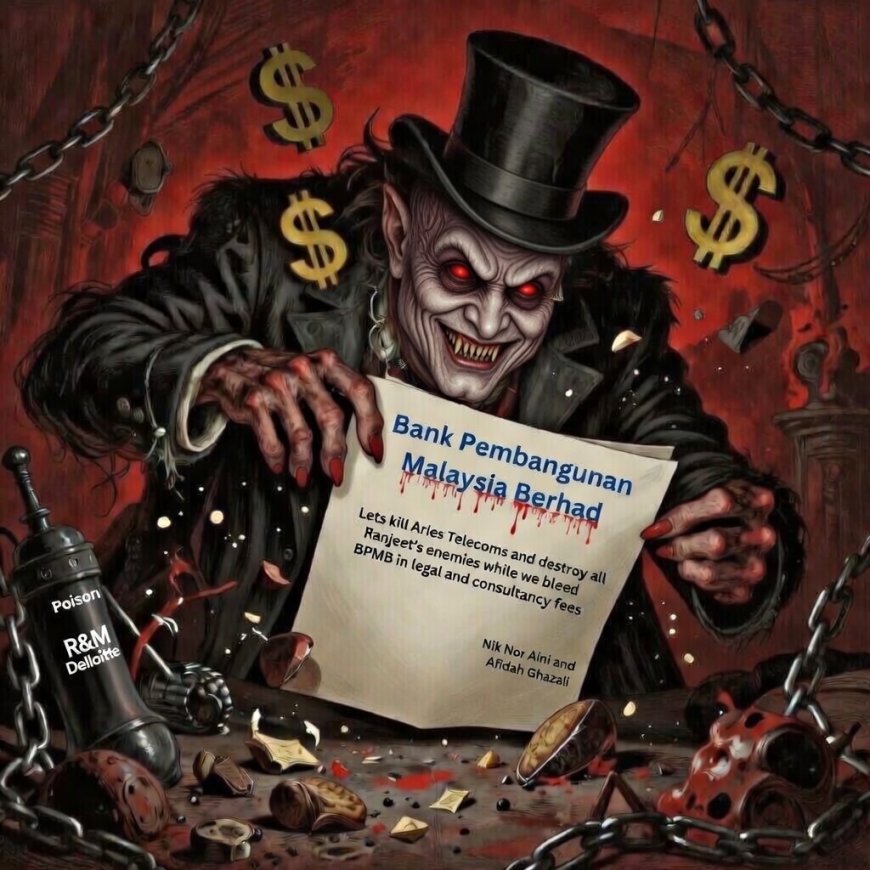
BPMB’s response? A curt, one-page rejection signed by Nik Nor Aini Nik Mohamed.
This was not merely a conservative banking decision. As Aries teetered in receivership, internal records indicated that RM75 million flowed from the company into entities controlled by Ranjeet Singh Sidhu. Rather than clawing back the millions, BPMB insiders—allegedly operating under the influence of a well-connected 'cartel'—steered the bank into a series of litigations that was eventually dismissed by the court in February 2026 for lacking locus standi.
In the written correspondence to the Board of Directors of Bank Pembangunan Malaysia Berhad (BPMB), shareholders Paneagle Holdings Berhad and Open Fibre Sdn Bhd proposed a comprehensive debt restructuring for Aries Telecoms (M) Berhad, preserving full principal, accrued interest, and stakeholder value on a RM400 million loan disbursed in 2012 for a Coastal Terrestrial Fibre-Optic Network infrastructure project. This letter, outlined a pathway to revival amid receivership, emphasizing no financial concessions from BPMB while allowing time for operational recovery. BPMB rejected the offer. This deflection, underscores a strategic disinterest in recovery, aligning instead with a pattern of economic sabotage targeting Aries and its affiliates who resisted Ranjeet's influence.
The proposal's terms, as extracted from the three-page letter, merit dissection not for their optimism but for their alignment with prudent banking practices in distressed asset management. Shareholders sought no haircut on principal or interest, proposing a 10-year revival period before commencing monthly repayments from January 1, 2030, to December 31, 2040, with a moratorium until December 31, 2030. BPMB would continue earning 5% per annum interest, retain its sole debenture security, and face no dilution in ultimate shareholding. The plan allowed Aries to issue new shares for capital infusion and pursue a future listing on a suitable exchange, positioning the company to generate positive cash flows from a telecom market where Aries had historically competed by offering 10x speeds at 90% of prevailing rates. Condition precedents included immediate authorization for Aries' legal team to proceed with a pending £100 million suit against Google - which was set for hearing within three weeks and the appointment of a judicial manager by June 30, 2020, to oversee restructuring. This structure mirrored standard schemes under Malaysia's Companies Act 2016, Section 366, for voluntary arrangements, avoiding liquidation's value erosion.

For Bank Pembangunan Malaysia Berhad (BPMB)—a development financial institution mandated under the Development Financial Institutions Act 2002 to bolster national infrastructure—the offer represented an optimal recovery path. By securing full principal repayment plus 5% compounded interest, the proposal was projected to yield an effective return exceeding RM600 million, effectively preserving taxpayer-backed capital within the state-owned entity. The public benefits extended far beyond the balance sheet. Reviving Aries’ 1,562km fibre-optic backbone would bridge the digital divide in underserved regions of Peninsular Malaysia, directly supporting the National Digital Network Plan (JENDELA). Furthermore, the plan sought to avert the collateral damage of liquidation, such as job losses and asset fire sales, while maintaining a claim to significant potential settlements from Aries’ litigation against Google. Unlike the adversarial path of receivership—which often incurs exorbitant administrative and legal fees from firms like Deloitte and PwC—this proposal prioritized a transparent, domestic solution that minimized jurisdictional arbitrage.
A series of internal rejections and legal maneuvers suggest that BPMB may have been steered away from debt recovery and toward the deliberate dismantling of a borrower. Court affidavits in a Suit 313 counterclaim now contextualize this as a calculated effort to thwart Aries’ attempts at a £100 million IPO in London. These listings, planned for 2015 and 2017, were intended to facilitate the full repayment of BPMB’s loans.

The Architect of Diversion
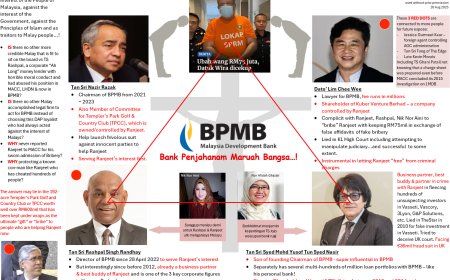
Evidence suggests BPMB may have been utilized as a vehicle for Ranjeet Singh Sidhu to dismantle the company while targeting those who opposed him. Allegations of a broader conspiracy implicate former acting CEO Afidah Mohd Ghazali and Nik Nor Aini in facilitating Ranjeet’s maneuvers, allegedly under the direction of Tan Sri Syed Yusof as the court filings reveal.
Records indicate that RM75 million was diverted within 48 hours of the loan’s first tranche, flowing to entities such as G&P Solutions and Rothchilds Capital. While Ranjeet reportedly admitted to these misappropriations in sworn affidavits, he secured a nominal RM500,000 consent judgment in Suit 264, payable in small installments. Critics highlight the hypocrisy of this settlement, noting that BPMB simultaneously claimed funds disbursed to Aries were protected under a Quistclose trust—effectively benefiting Ranjeet from contradictory legal interpretations.
The BPMB Shield
A central question remains: why did BPMB fail to report Ranjeet’s bribery admissions to the Malaysian Anti-Corruption Commission (MACC)? Instead of escalating these disclosures, insiders—including Nik Nor Aini and Tan Sri Rashpal Singh Randhay—allegedly accepted fabricated narratives, a move that potentially violates anti-corruption protocols. Under Section 17(a) of the MACC Act, the failure to report a known bribe may leave the bank itself vulnerable to charges, effectively resulting in institutional self-incrimination.
Shifting Allegations
The legal narrative continued to mutate long after the initiation of Suit 264. Sworn affidavits from Datuk Noorusaadah were characterized by striking inconsistencies: initially denying any bribery, then performing a U-turn to admit to its existence in order to secure a consent judgement settlement, before finally reverting to a total denial in Suit 510.
Influence Peddling and Media Trials
Tan Sri Rashpal’s appointment to the BPMB board in April 2022 signaled a pivot toward aggressive litigation. Despite skepticism surrounding his credentials, Rashpal allegedly spearheaded Suit 264, targeting 30 defendants—many of whom lacked any functional connection to the loan in question. Investigative reports have previously linked Rashpal to Ranjeet via Vascory Berhad and Knight Capital, a licensed moneylender described as a money-laundering front. Alongside BPMB’s legal counsel, Dato’ Lim Chee Wee, Rashpal reportedly orchestrated the leak of an ex-parte Mareva injunction to The Edge Malaysia. This move facilitated "media trials" against innocent parties and constituted a blatant disregard for judicial process, amounting to both contempt of court for leaking sealed documents and criminal contempt against the affected defendants.
The Human and Financial Toll
The consequences of this institutional capture are staggering. The financial losses include RM400 million in principal and RM166 million in interest that remain unrecovered. Meanwhile, investor frauds linked to the wider cartel are estimated to exceed RM1 billion.
On February 23, 2026, Judge Quay Chew Soon dismissed Suit 264, ruling that BPMB lacked locus standi. However, the damage was already done:
-
Reputational Ruin: Targeted individuals, unconnected defendants unable to recover from reputational and financial ruins.
-
Loss of Life: The stress of relentless litigation has been linked to the deaths of former BPMB President Zafer and defendant Mohd Radzi.
Ultimately, the 2019 rejection of Aries' offer appears to be a case of institutional sabotage. Had the bank acted in its own financial interest, Aries might have thrived and repaid its debts. Instead, the pursuit of personal vendettas has left a trail of financial ruin and human suffering. Forensic audits of BPMB’s board files are now essential to dismantling this web of opacity.