Attorneys for alleged South American drug trafficker Sebastián Marset have asked a federal judge to halt the search of a potentially pivotal cellular phone until the U.S. government explains how it took control of the device from Bolivia.
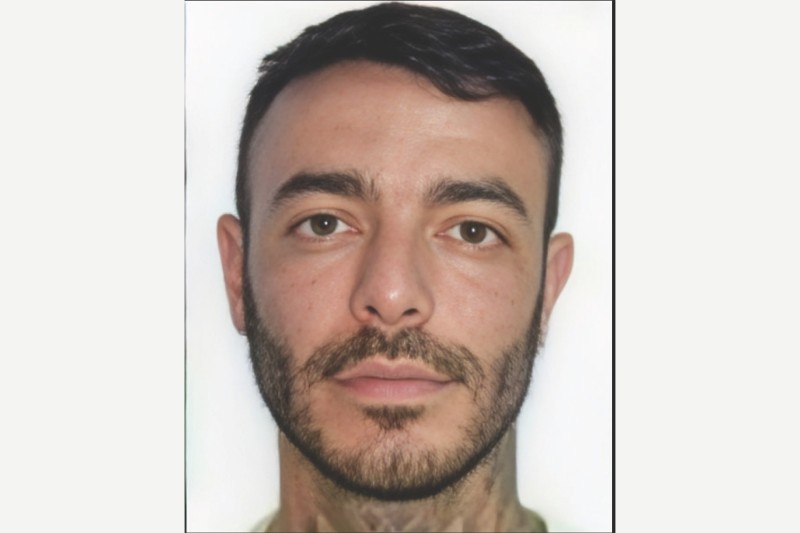
Marset, a Uruguayan national and self-proclaimed “King of the South,” was arrested in March in a pre-dawn raid in Santa Cruz, Bolivia. Soon after his arrest, he was expelled to Peru and then whisked to the U.S. where he faces money laundering, drug trafficking and narco terrorism charges.
Law enforcement officers in Bolivia seized three phones from the house where they arrested Marset. However, it has emerged that they seized a fourth phone from an adjacent house.
Defense lawyers say in their motion — dated October 23 — that “it is impossible” for them to “be certain as to the timing of the search and whether it was done at the behest of the DEA [Drug Enforcement Administration] or was otherwise valid under Bolivian law.”
They argue that they weren’t notified about the fourth phone, which was a potential key piece of evidence for months, hampering their efforts and raising questions about the integrity of the operation.
The phone was sent to the DEA in mid-April, but didn’t appear in any court documentation shared with the defense team until late July.
“No contemporaneous report of the chain of custody appears to have been prepared,” Marset’s defense team wrote to U.S. District Judge Rossie Alston Jr., who presides in the Eastern District of Virginia.
The DEA confirmed to the defense team, the filing said, that it had extracted data from the phone without a court order. The agent "theorized that the search did not require a court order because the defendant had previously ‘consented’ to the search of his other devices."
The lead prosecutor did not respond to a request for comment in time for publication. The DEA said it “does not comment on allegations.”
The prosecution has alleged that the four phones were used by Marset to access cryptocurrency accounts.
Crypto accounts have featured prominently in pre-trial disputes. Marset’s legal team alleges that DEA agents tried to trick his elderly mother into handing over passphrases for accounts that hold his digital currency, and later asked him to “donate” his $4 million in crypto assets.
“A seizure does not require asking the detainee’s mother for a photo of a notebook containing access phrases, which are used to move funds, not to secure them. Such contradictions warrant an explanation, which has yet to be provided,” Santiago Moratorio, Marset’s Uruguayan attorney, told OCCRP.
In a September court proceeding, the lead DEA agent denied the allegation that they had asked for a donation.
The Marset case is being closely watched across South America because of his connections to Colombia, and allegations that he had protection in Paraguay and Bolivia where more than a dozen officials were recently detained under suspicion that they had ties to Marset.
The State Department recently revoked visas for 12 Bolivian government, police, and political figures. It cited the need to defend against corruption and narco-trafficking, and said another unidentified nine Bolivians would be denied visas.
Marset’s lawyers argue that the initial charge of money laundering is invalid because it involved a single wire transfer between Portugal and China that did not involve the servers of a U.S. bank. The lawyers say Marset never trafficked drugs to the U.S. and the narco terror groups cited in court were not designated as such at the time of his dealing with them.
In pre-trial conferences, Marset’s defense team has challenged several elements of the case, trying to get the judge to strike down portions of the indictments and weaken the prosecution. Alston has said he would rule on these motions by November 6.